
As we head into 2026, business owners and marketers are being hit with more noise than ever.
New platforms. Even newer technology. New “must-do” tactics that promise fast growth and easy wins.
But here’s the truth: while the tools change, the fundamentals don’t.
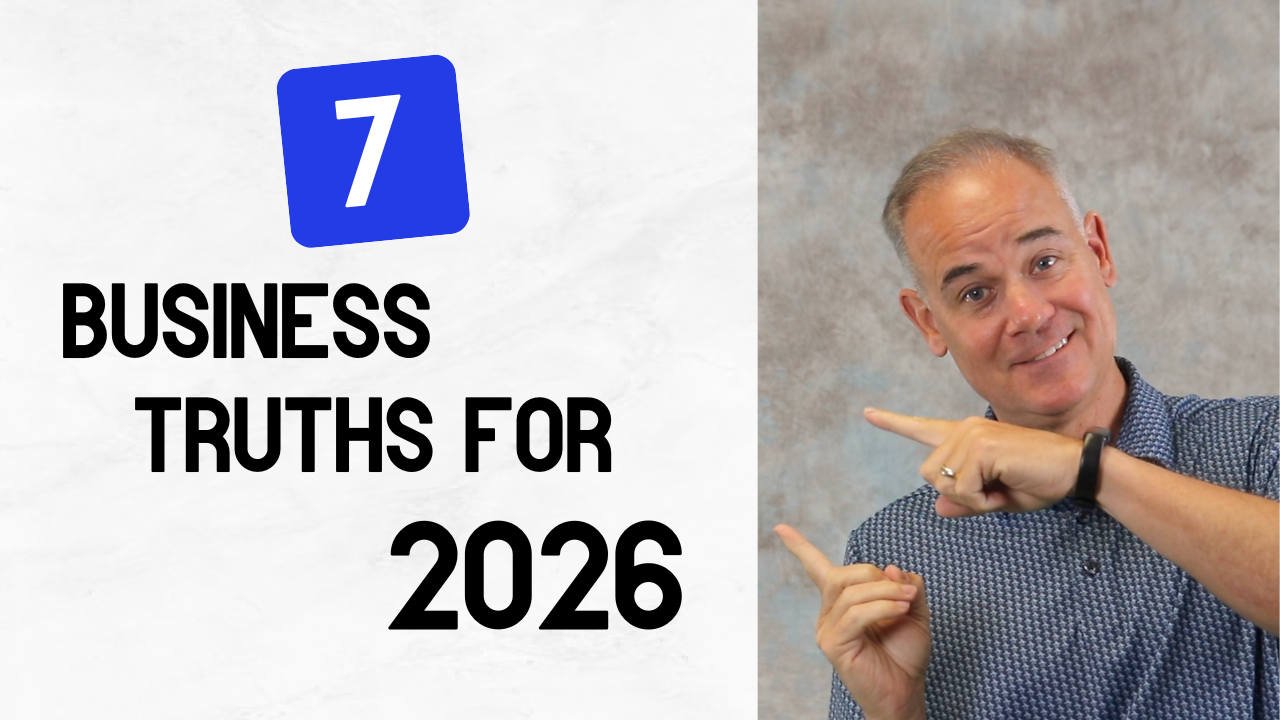
In this video, I share seven Business Truths for 2026—not predictions, not hacks, but principles I’ve seen hold true over and over again while working with organizations of all sizes.
If you have not already subscribed to our podcast channel, today is a great day to do it! You can find us on YouTube, Apple Podcasts, Spotify, or wherever you listen. Just search “Delivering Marketing Joy,” and you will have access to all of our podcasts in one place!
A little bit each day is more powerful than a lot once a week
Consistency beats intensity—every time.
It’s tempting to believe that big bursts of effort will move the needle faster. But in real life, progress usually comes from small, repeated actions done consistently over time.
This applies to content creation, sales outreach, fitness, leadership, and marketing. Posting occasionally won’t outperform showing up regularly. Checking in with customers once a year won’t build loyalty like small, thoughtful touchpoints throughout the year.
In 2026, the brands that win won’t be the loudest—they’ll be the most consistent.
You need more than one tool in the toolbox to grow sales
There is no single channel that saves a business.
If your entire growth strategy relies on one platform, one salesperson, or one tactic, you’re building on shaky ground. Algorithms change. Markets shift. People move on.
Strong businesses diversify how they attract, engage, and retain customers. That might mean a mix of email, social media, sales outreach, referrals, events, and physical touchpoints.
Growth doesn’t come from finding the tool—it comes from building a balanced system.
Despite new technology, appreciation is still a superpower
Gratitude scales trust faster than automation ever will.
AI and automation can improve efficiency, but they can’t replace how people feel when they’re genuinely appreciated. A handwritten note. A thoughtful gift. Even a sincere thank-you.
Customers don’t leave companies because of a lack of technology—they leave because they feel forgotten or undervalued.
In 2026, appreciation won’t be outdated. It’ll be a competitive advantage.
Life is hard. Thinking it should be easy makes it harder
Resilience is a business skill.
There’s a subtle but damaging belief floating around that if something feels hard, it must be wrong. That simply isn’t true.
Building a business is challenging. Leading people is challenging. Growth is uncomfortable by nature.
The sooner we accept that difficulty is part of the process—not a sign of failure—the more equipped we are to push through it. The most successful leaders I know don’t avoid hard things. They expect them.
Attention is the real currency—and trust is how you earn it
Reach without trust is just noise.
You can buy attention. You can chase views. You can go viral. But none of that matters if people don’t trust you.
Trust is built through consistency, clarity, and delivering on promises—over time. It’s built when your marketing matches your reality and your values show up in your actions.
In a crowded marketplace, trust is what turns attention into action.
The businesses that win don’t do more—they do fewer things better
Focus is not a limitation. It’s a growth strategy.
Many businesses stall because they try to do everything at once. I know I have been guilty of this. I want to be on every platform. Chase every opportunity.
The companies that scale tend to choose a few core strategies—and execute them exceptionally well. Focus creates momentum. Momentum creates results.
In 2026, doing less—but doing it better—will matter more than ever.
Digital marketing works better when it’s paired with something physical
Screens start conversations. Tangible things build memory.
We live in a digital world, but humans are still physical beings. We remember what we can touch, feel, and experience.
Digital marketing is powerful, but when it’s paired with physical touchpoints—like branded merchandise, direct mail, or thoughtful gifts—it becomes more memorable and more effective.
The future isn’t digital or physical. It’s digital and physical, working together.
Final Thought
None of these business truths are flashy. That’s the point.
They’re fundamentals—principles that compound over time if you commit to them. As we move into 2026, the organizations that succeed won’t be the ones chasing every new trend. They’ll be the ones doubling down on what works, serving people well, and building trust one interaction at a time.
If you have not already subscribed to our podcast channel, today is a great day to do it! You can find us on YouTube, Apple Podcasts, Spotify, or wherever you listen. Just search “Delivering Marketing Joy,” and you will have access to all of our podcasts in one place!
And as always, we are here to help! If you need help with branded merch, merch strategy, or creative ideas to grow your brand or your team, let’s talk. We’d love to help you. Get your TARGET Hiring Playbook here for free!