
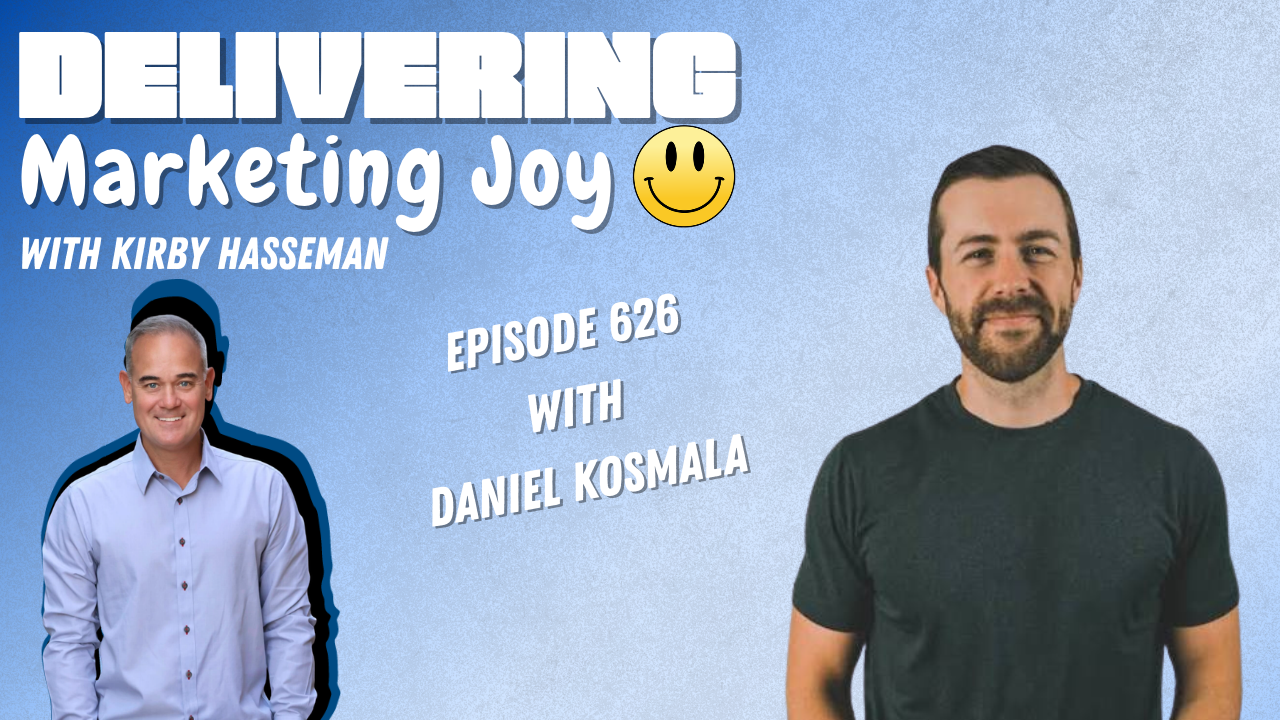
Daniel Kosmala joins Delivering Marketing Joy to discuss customer retention, reducing churn, and why constantly discounting your products can hurt your business.
Everyone loves a good deal. But what happens when discounts become the only way you know how to make a sale?
For many businesses, lowering prices feels like the easiest way to attract customers, close deals, and stay competitive. But relying too heavily on discounts can create a dangerous cycle that’s difficult to escape.
In episode 626 of Delivering Marketing Joy, Kirby Hasseman welcomes Daniel Kosmala for a conversation about the discount trap, understanding customer retention, analyzing customer churn, and creating a more unified approach to building lasting customer relationships.
What Is the Discount Trap?
The discount trap happens when a business continually lowers its prices because it believes that’s the only way customers will buy.
Maybe a prospect hesitates, so you offer 10% off. Another customer pushes back on pricing, so you throw in something extra. Before long, discounting becomes your default sales strategy.
The problem? You’re teaching customers to focus on price instead of value.
When businesses constantly discount their products or services, they risk shrinking profit margins and making it harder to sell at full price in the future.
Even worse, customers may begin expecting a discount every time they make a purchase.
If the only reason someone buys from you is because you’re cheaper, what happens when someone else offers an even lower price?
That’s why escaping the discount trap starts with communicating the value of what you offer.
Customer Retention Is Just as Important as Customer Acquisition
Businesses often spend enormous amounts of time and money trying to attract new customers.
But what about the customers they already have?
Customer retention is about creating experiences, relationships, and ongoing value that give people a reason to continue doing business with you.
Instead of constantly chasing the next sale, businesses should also focus on what happens after someone becomes a customer.
Are customers getting the results they expected? Do they understand the value they’re receiving? Are you continuing to communicate with them?
These questions matter because a strong customer relationship shouldn’t end after the initial purchase.
The goal isn’t simply to win customers. It’s to give them reasons to stay.
Content, Community, and Enablement: A Unified Approach
Another important topic in this episode is the connection between content, community, and enablement.
Too often, businesses treat these as separate activities rather than parts of one customer experience.
But when they work together, they can reinforce the value customers receive.
Content helps educate customers, answer questions, and demonstrate expertise.
Community creates opportunities for customers to connect, share experiences, and develop stronger relationships with a brand.
Enablement gives customers the resources, knowledge, and support they need to successfully use a product or service.
Together, these three elements can help businesses move beyond transactional relationships.
Instead of relying on discounts to keep customers interested, companies can focus on helping customers recognize and experience the value of what they’ve purchased.
Understanding Customer Churn
Customer churn happens when customers stop purchasing from or maintaining a relationship with a business.
Some customer turnover is inevitable, but understanding why people leave is essential to improving retention.
Are customers leaving because of pricing? Poor communication? Unmet expectations? A lack of ongoing support?
Without analyzing churn, businesses may find themselves repeatedly replacing customers without addressing the underlying problems.
And discounting isn’t necessarily the answer.
If customers are leaving because they don’t understand how to use your product or aren’t receiving the expected value, lowering the price won’t solve the real issue.
Businesses need to look beyond the immediate sale and examine the entire customer experience.
Stop Competing on Price. Start Competing on Value.
Discounts aren’t inherently bad. Strategic promotions can serve a purpose.
The danger comes when lowering prices becomes your primary method of attracting and retaining customers.
Building a sustainable business requires understanding what customers value, delivering on your promises, and creating relationships that extend beyond a single transaction.
That means investing in customer education, strengthening community connections, providing meaningful support, and paying attention to why customers stay—or leave.
When customers understand the value you provide, price doesn’t have to be the only reason they choose you.
Watch Delivering Marketing Joy Episode 626
Want to learn more about avoiding the discount trap and building stronger customer relationships?
Join Kirby Hasseman and Daniel Kosmala for Delivering Marketing Joy Episode 626: The Discount Trap.
They discuss customer retention, the relationship between content, community, and enablement, and the importance of understanding customer churn.
If you’re a business owner, entrepreneur, or marketing professional looking to build stronger customer relationships without constantly lowering your prices, this conversation is worth watching.
Watch the full episode now, and don’t forget to like, subscribe, and share!