
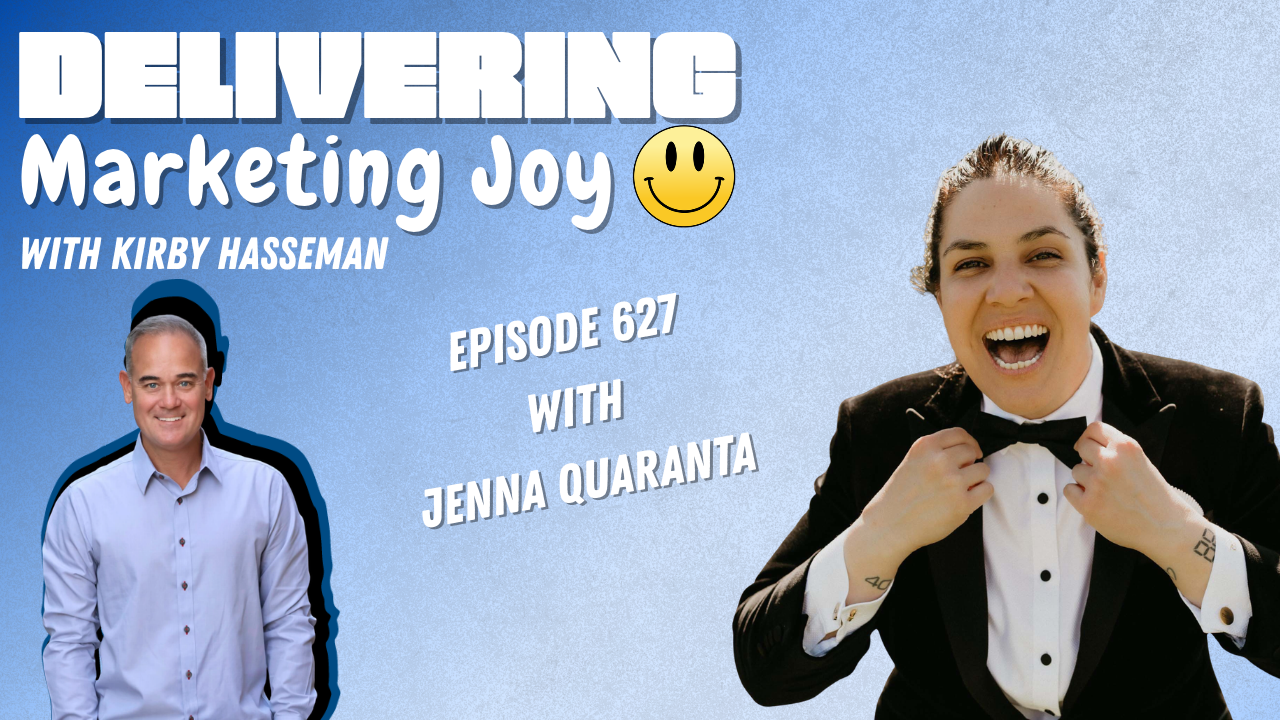
Jenna Quaranta joins Delivering Marketing Joy to discuss the FSM sales methodology, the psychology of selling, and why mental health deserves more attention in sales.
Sales can be one of the most rewarding careers out there. It can also be one of the most mentally demanding.
Between meeting quotas, handling rejection, managing customer expectations, and constantly pursuing new opportunities, sales professionals face pressures that aren’t always visible from the outside.
But what if becoming better at sales isn’t just about learning new closing techniques? What if it’s also about understanding human behavior and taking better care of the people doing the selling?
In episode 627 of Delivering Marketing Joy, Kirby Hasseman welcomes Jenna Quaranta for a conversation about the FSM sales methodology, mental health in sales, and the role human behavior plays in building better sales relationships.
Why Mental Health in Sales Matters
Sales professionals deal with rejection regularly. Even the most talented salesperson will hear “no” far more often than they’d like.
Over time, that rejection can take a toll.
Add performance expectations, unpredictable sales cycles, and the pressure to consistently produce results, and it’s easy to understand why mental health should be part of the conversation.
Unfortunately, many sales environments focus almost exclusively on numbers.
How many calls did you make? How many meetings did you schedule? How much revenue did you generate?
Those metrics matter, but they don’t tell the whole story.
A healthy sales culture should focus on both performance and the people responsible for delivering it.
Recognizing the emotional demands of selling can help organizations create more supportive environments where salespeople have opportunities to develop, improve, and perform sustainably.
Understanding the FSM Sales Methodology
One of the central topics of this episode is the FSM sales methodology.
Sales methodologies provide a framework for approaching conversations, understanding customers, and moving opportunities forward.
But a methodology should do more than give salespeople a script to memorize.
The most useful sales frameworks help professionals think more intentionally about how they communicate, respond to challenges, and build relationships.
In this episode, Jenna Quaranta introduces the FSM methodology as part of a broader conversation about sales performance and human behavior.
For business owners and sales leaders, exploring different approaches to selling can provide valuable perspective on how their teams operate.
The important question isn’t simply whether a methodology helps close more deals. It’s also whether it helps create a more effective, consistent, and sustainable sales process.
Human Behavior Is at the Heart of Sales
It’s easy to think of sales as a numbers game.
And while activity and consistency are important, there’s another factor that deserves just as much attention: people.
Every sales conversation involves human behavior.
Customers have different motivations, concerns, expectations, and decision-making processes. Salespeople bring their own experiences, emotions, and communication styles into those interactions.
Understanding those dynamics can make a meaningful difference.
Rather than approaching every prospect with the same pitch, effective sales professionals recognize the importance of listening, asking thoughtful questions, and adapting their communication to the person in front of them.
Great sales conversations aren’t just about delivering the right message. They’re about understanding the person receiving it.
That human element becomes especially important as technology and automation continue changing how businesses communicate.
Better Sales Starts With Better Conversations
Technology can help sales teams work more efficiently. Automation can streamline follow-ups, organize information, and reduce repetitive tasks.
But technology alone doesn’t create meaningful relationships.
Trust still matters. Communication still matters. And understanding what motivates people remains an essential part of the sales process.
Businesses that want to improve their sales performance should consider more than simply increasing activity.
They should also examine how their teams communicate, how they support their salespeople, and whether their processes encourage genuine customer relationships.
Sometimes improving sales results begins with improving the experience of selling itself.
Building a More Sustainable Approach to Sales
Successful sales organizations need strong processes, clear expectations, and consistent execution.
But they also need to recognize that salespeople are human.
A sustainable approach to selling balances accountability with support, performance with well-being, and strategy with an understanding of human behavior.
The goal shouldn’t be to eliminate every challenge associated with sales. That’s unrealistic.
Instead, businesses can work toward creating environments where people have the tools, knowledge, and support to navigate those challenges effectively.
Because long-term success isn’t just about closing the next deal.
It’s about building the people, processes, and relationships that make future success possible.
Watch Delivering Marketing Joy Episode 627
Want to learn more about the psychology of selling and how human behavior influences sales performance?
Join Kirby Hasseman and Jenna Quaranta for Delivering Marketing Joy Episode 627: The FSM Sales Methodology.
They explore mental health in sales, the FSM sales methodology, and the importance of understanding human behavior in sales conversations.
Whether you’re a sales professional, entrepreneur, or business leader looking to improve your approach to selling, this episode offers a conversation worth exploring.
Watch the full episode now, and don’t forget to like, subscribe, and share!