
This blog is one post in a series on HYBRID Marketing. Read on to learn more.
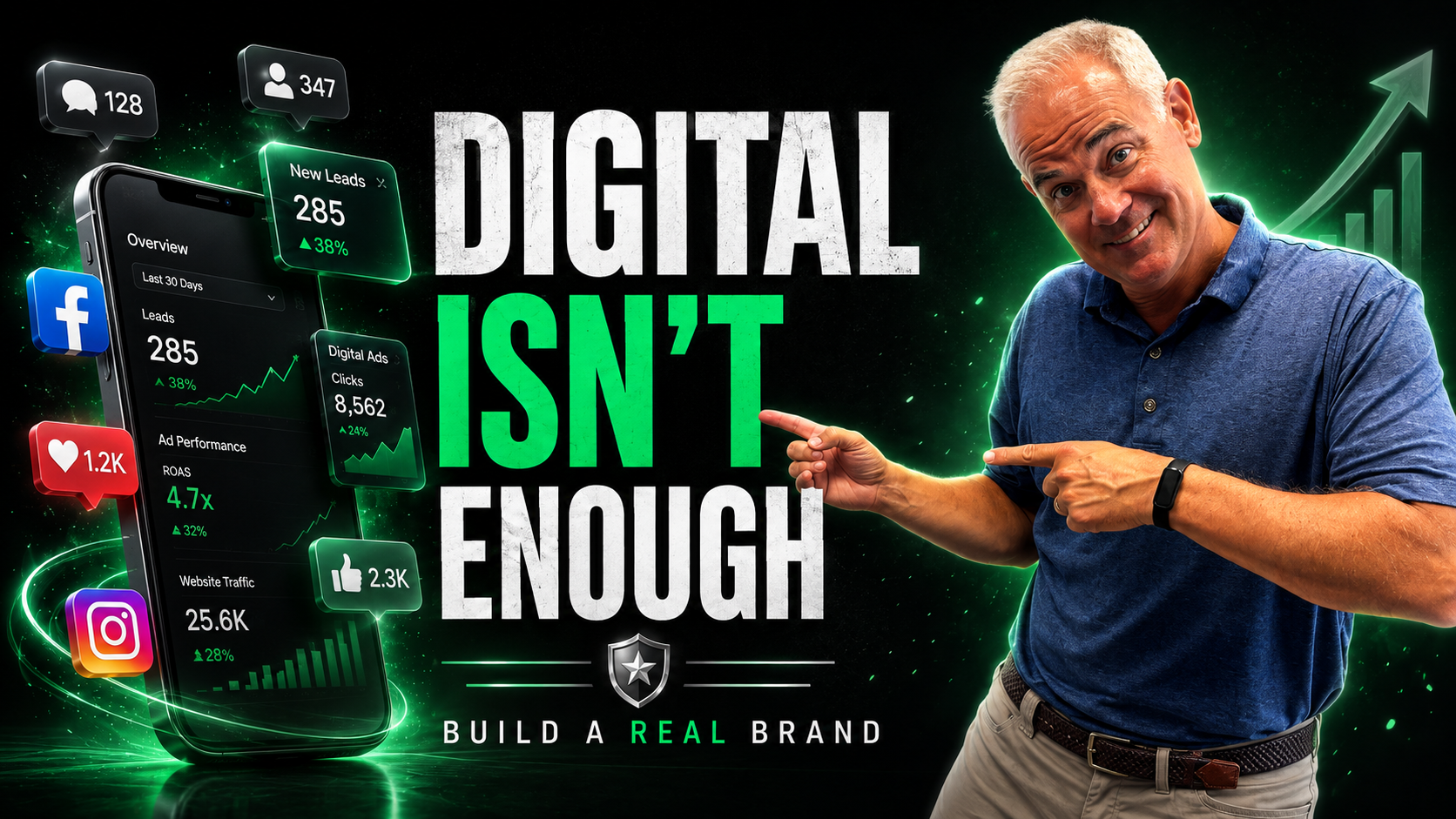
I hear this a lot, and honestly, I used to say some version of it myself: “We’ve got great social media, we run ads, engagement’s solid.”
Here’s the question that undercuts that humble-brag every time: what happens after someone likes the post?
For most all-digital businesses, the honest answer is nothing. The relationship stays thin. It lives entirely on a screen. And it’s easy to forget about you, because five minutes later the next post is already coming from someone else.
I get into this in this week’s Delivering Marketing Joy 1 on 1 — watch it here, then keep reading, because I want to unpack why this happens and what actually fixes it.
Let me be clear — digital is great
This isn’t an anti-digital episode, and it’s not an anti-digital post. Digital marketing is fast, targeted, measurable, and unmatched at getting you noticed. If you’re not running digital, you should be.
The problem was never the channel. The problem is stopping there.
The story that proves it — and it’s not even about marketing
Years ago, I went through the P90X3 fitness program, and the way it pulled me in is one of the best examples of hybrid marketing I’ve ever seen — even though nobody who built it was thinking about “hybrid marketing” at all.
Ads created the desire. I saw the transformation photos, the promises, the energy — that’s what got my attention in the first place. But it was the physical product showing up at my door that sealed the decision. And then, once I started seeing results, I did exactly what thousands of other people did: I posted my own progress. That post became new content, which created desire in someone else, which started the whole cycle over again — bigger each time.
None of those three pieces worked in isolation. Digital, physical, and the person’s own experience all had to work together. That’s the whole idea in miniature.
What’s actually missing when you stay all-digital
Here’s the part I want you to sit with: digital doesn’t occupy space. It doesn’t have weight. It disappears the moment someone closes the tab.
A brand that lives only online can feel thin the second someone meets you in person, or gets something from you they can actually hold. There’s nothing to hold onto — literally.
Now contrast that with a brand that shows up physically too. A follower stops being just a follower. They become someone with your shirt on their back, or your gift sitting on their desk where they see it every day. That’s a completely different relationship than a like or a follow.
A moment is not a brand
There’s a line I keep coming back to: a viral moment is not the same as a compounding brand.
Digital is brilliant at creating the spark of interest. But it’s physical marketing that makes that interest tangible — that turns a casual follower into an actual brand ambassador, and restarts the cycle bigger than it was before. Moments fade. Compounding brands are built on purpose, one connected touch at a time.
One move to make this week
You don’t need to overhaul anything to start. Here’s the one move: take your single best-performing piece of digital content or ad right now — the one that’s already working — and give it one physical touch.
That could be a mailed item, a printed leave-behind, or an in-person handoff for the people who engaged with it. Don’t launch anything new. Just give your best digital moment a physical second act, and watch what happens to how people respond.
See where your own marketing stands
If you’re not sure whether your marketing is leaning too far to one side — all digital, or all physical, and missing the other half — the HYBRID Marketing Scorecard will show you exactly where you stand in just a few minutes.
scorecard.hassemanmarketing.com
Digital gets you noticed. Physical is what makes you remembered. You need both.