
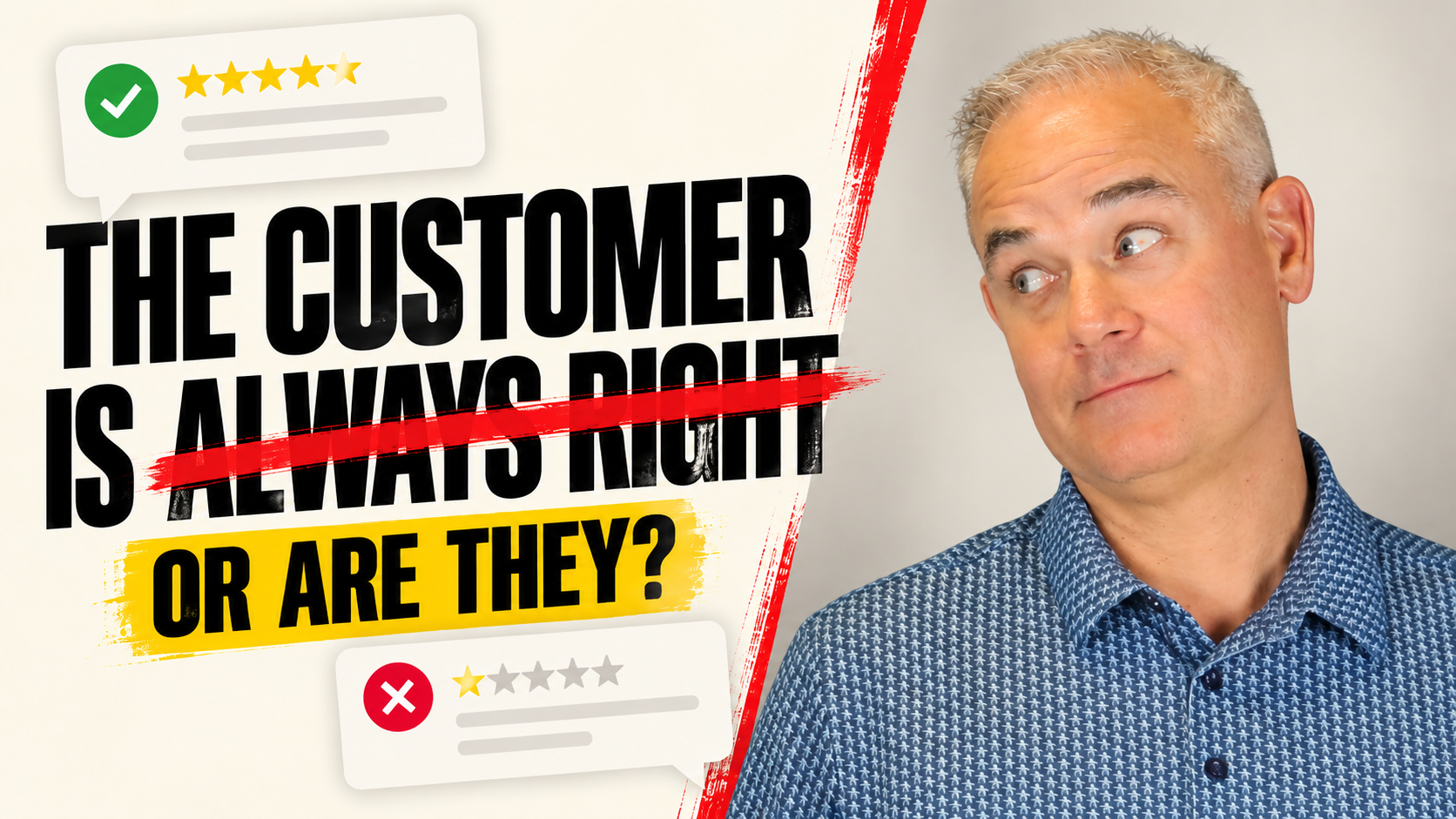
I was out running the other day, thinking about a piece of business advice we have all heard: “The customer is always right.”
I think that comes from a good place. Take care of people. Provide great service. Treat customers the way you would want to be treated.
But the longer you are in business, the more you realize that customers sometimes want something you simply don’t offer. So what if we changed that saying just a little?
The right customer is always right.
On this episode of DMJ 1 on 1, I explore knowing who you serve, giving yourself permission to say no, and listening when your best customers tell you something needs to improve.
Watch the episode here:
A Customer Can Ask. A Business Can Say No.
Recently, I heard about a gentleman complaining on Facebook because an oil-change business wouldn’t let him bring his own oil. He was frustrated because buying the oil from the business would cost more.
My reaction? The business owner is allowed to say no.
There is nothing wrong with asking. But asking doesn’t obligate a business to accommodate the request. Another shop might happily let him bring his own oil. That could be the right shop for him.
Customers get to decide where they spend their money. Businesses get to decide what service they provide. Both sides get a choice.
Be Clear About What Your Business Offers
At Hasseman Marketing, we don’t decorate or embroider apparel that people bring to us. Someone may already have shirts and simply want us to add a logo. I understand the request. But that’s not a service we offer.
The example I use is that you don’t take your own burgers to McDonald’s.
Another provider might be willing to do that work, and that’s okay. We don’t have to make someone wrong to recognize that we aren’t the right provider for them.
That distinction matters. You can respect a person, understand what they want, and still recognize that the request doesn’t fit how your business operates.
Give Yourself Permission to Say No
This is hard for business owners because we want to help. We see a problem and immediately start figuring out how to solve it. We want the sale. We want the relationship. We don’t want to disappoint someone.
So we say yes, even when the request doesn’t fit.
But that yes can create work we aren’t set up to deliver. Our team gets frustrated. Expectations get muddy. And the customer can end up disappointed anyway.
You can care about someone’s problem without agreeing to be the person who solves it.
Be respectful. Be clear about what you offer. When you know someone who would be a better fit, point the customer in that direction. Having boundaries doesn’t mean you don’t care about service.
Define Who the Right Customer Actually Is
Here is where we have to do some work. Many businesses haven’t clearly defined their perfect customer. We say we want more customers. But more of whom?
Think about your favorite customers. What makes those relationships work?
Your right customer is someone who:
- Needs what you do well.
- Values what you provide.
- Understands the value behind the price.
- Has expectations that fit the service you offer.
- Treats your team with respect.
Get specific about what those people need and why your business is a good fit. It brings us back to a question I keep asking: Who is your perfect customer, and what specific problem are you solving for them?
When you can answer that, you can be clearer about the work you should pursue and the promises you should make.
When the Right Customer Speaks, Listen
Does this mean our perfect customers are literally right about everything? Of course not. They can misunderstand something or make a request we can’t accommodate.
But their feedback deserves serious attention. These are the people we built the business to serve.
The right customer isn’t simply someone who never complains. If they tell us our process is confusing, we should look at it. If they have to chase us for updates, we should own that. If we miss a deadline we agreed to, we need to make it right.
We can’t dismiss someone as a bad fit just because they are holding us accountable.
A customer asking you to keep your promise is different from a customer asking you to change your business.
Great customers can help us see where we are falling short. We need to be willing to improve the experience we promised them.
This Week’s Challenge: Start With Your Three Best Customers
Write down your three best customers. Identify what they have in common. Then ask yourself two questions:
- What do they value most about working with us?
- What have they been telling us we need to improve?
You don’t have to say yes to every request. You do need to know who you serve, be clear about what they can expect, and take their concerns seriously.
The customer isn’t always right. But when the right customer tells you that you’re falling short, you’d better listen.
Make Your Marketing Clear About Who You Serve
Once you know your right customer, look at what your marketing tells them. Does it clearly explain the problems you solve and the value you provide? Are your physical and digital efforts telling the same story?
Our Visibility Roadmap audits your physical and digital marketing, identifies gaps, and shows you how to address them—with or without our help implementing the plan.