
How to Write Better Sales Follow-Ups That Actually Get Responses
Let’s face it. Getting someone to respond to a sales email, proposal, or follow-up message is harder than ever.
Our inboxes are overflowing. We’re constantly being bombarded with marketing messages, sales pitches, and automated emails. And now, with artificial intelligence making it easier than ever to generate content, the noise is only getting louder.
So how do you stand out? How do you get someone to actually respond?
In a recent episode of DMJ 1 on 1, Kirby Hasseman, owner of Hasseman Marketing and author of Hybrid Marketing, shares practical strategies for improving your sales follow-ups and creating conversations that actually move forward.
And it starts with understanding one important truth: Following up isn’t the problem. How you follow up makes all the difference.
There’s No Magic Button in Sales
Everyone wants the secret formula that will instantly get prospects to respond. Unfortunately, that magic button doesn’t exist.
One of the biggest mistakes salespeople make is giving up too early.
They send an email, follow up once or twice, and when they don’t hear anything, they assume the prospect isn’t interested.
But Kirby points out that it can sometimes take 13 to 17 touches before a meaningful response or opportunity develops.
That doesn’t mean everyone needs exactly 17 emails. The point is that persistence matters, and relationships often take longer to develop than we expect.
Instead of treating silence as rejection, think about how you can continue providing value and staying visible without becoming a nuisance.
“Just Checking In” Isn’t the Worst Thing You Can Say
We’ve all sent the email.
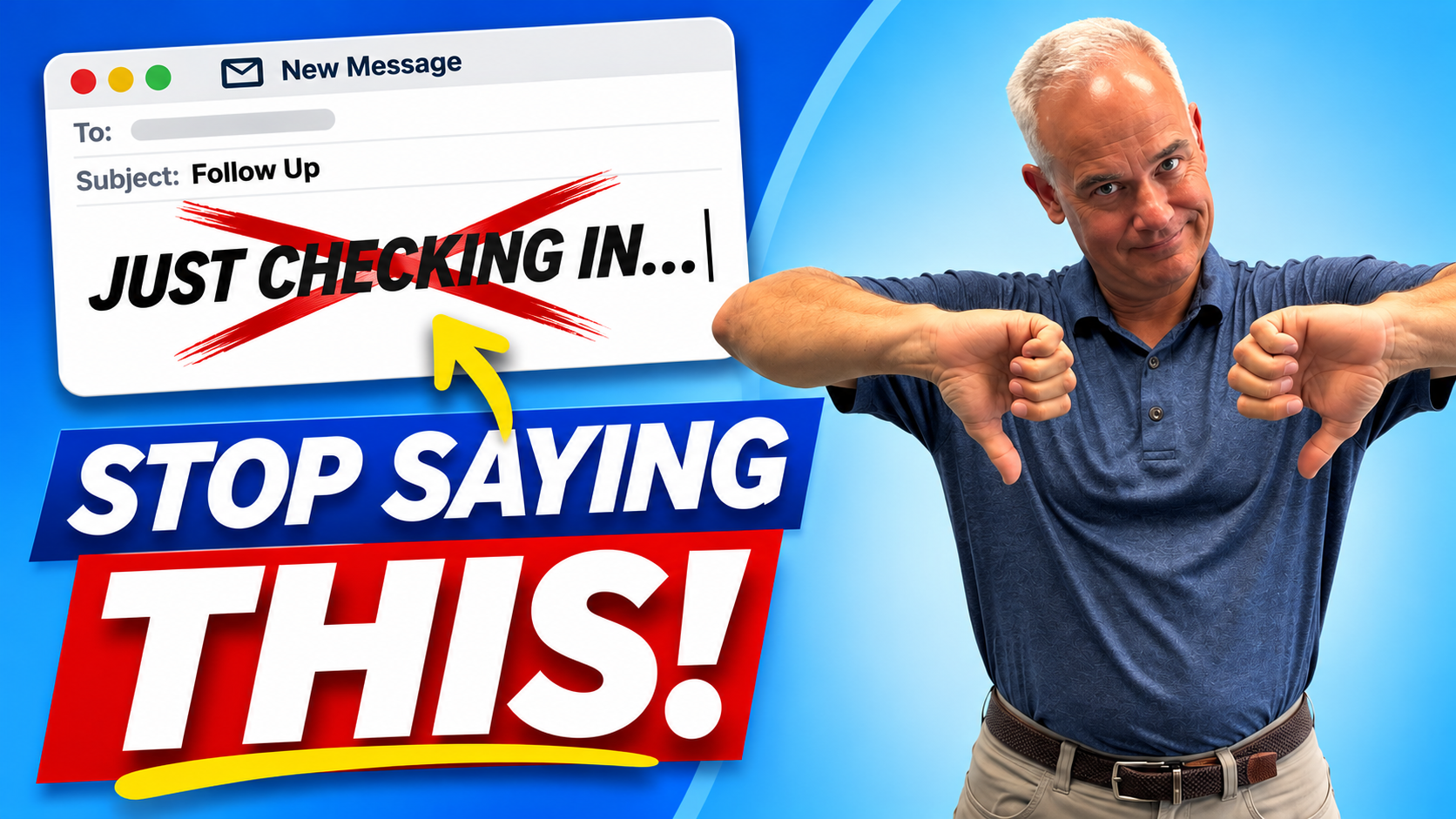
“Hey, just checking in to see if you’ve had a chance to review my proposal.”
It’s simple. It’s familiar. And it’s probably not the most effective way to get a response.
But here’s an important distinction Kirby makes: Just checking in is still better than not following up at all.
The real problem isn’t the phrase itself. It’s that these messages often give the recipient no compelling reason to respond.
If you’re going to reach out, why not make that interaction more valuable?
Rather than simply reminding someone that you’re waiting, use the opportunity to restart the conversation with something relevant.
Make Your Follow-Ups Personal and Specific
Generic follow-ups are easy to ignore.
Personalized follow-ups show that you’ve been paying attention.
Think about the prospect’s business, the challenges they mentioned during your last conversation, or the specific project you’re discussing.
Instead of sending another generic reminder, reference something meaningful.
For example, if you’re following up on a branded merchandise proposal for an employee appreciation event, you might ask whether the event date has changed or whether they’ve finalized their estimated attendance.
That gives the prospect a specific reason to engage.
The more relevant your message is to their actual situation, the easier it becomes to restart the conversation.
The goal isn’t simply to remind people you exist. It’s to demonstrate that you understand what matters to them.
Stop Asking “Any Thoughts?”
Another common follow-up mistake is making the recipient do too much work.
Questions like “Any thoughts?” or “What do you think?” might seem harmless, but they’re incredibly broad.
The recipient has to decide what you’re asking, formulate an answer, and figure out how much detail to provide.
That’s unnecessary friction.
Instead, ask a specific question that makes responding easy.
For example:
- “Are you still targeting a November launch?”
- “Would it help if I put together a lower-cost option?”
- “Has this project moved to the back burner?”
Each question gives the recipient a clear direction for responding.
Sometimes, the smallest change in how you ask a question can make a significant difference.
Make It Easy for Someone to Say No
This might sound counterintuitive, but not every sales question should be designed to get a yes.
Sometimes asking a question that makes it comfortable to say no is exactly what moves a conversation forward.
Consider this example:
“Would it be a bad idea to revisit this next month?”
That feels different from asking someone to commit immediately.
It removes some of the pressure and gives the prospect permission to be honest.
A no isn’t always a failure. Sometimes it’s the information you need to understand where the relationship stands and what should happen next.
The objective is to create a conversation, not force a commitment.
Use AI as Your Intern, Not Your Marketing Director
Artificial intelligence can be an incredible tool for sales and marketing.
It can help brainstorm follow-up ideas, refine emails, organize information, and create more efficient workflows.
But Kirby offers an important reminder: AI should be your intern, not your chief marketing officer.
Don’t let AI replace the human thinking that makes your communication meaningful.
You still need to understand your customers, recognize their challenges, and determine what message makes sense for each relationship.
Use AI to make your work better and faster, but don’t outsource the relationships that make your business valuable.
Your Challenge: Follow Up With Three People
Knowing how to improve your follow-ups is one thing. Actually doing it is another.
Kirby closes this episode with a simple challenge.
Identify three conversations:
- A proposal waiting for a response. Reach out with a specific question that helps move the decision forward.
- A stalled conversation. Find a relevant reason to reconnect and restart the discussion.
- A past customer you haven’t spoken with recently. Check in, reconnect, and look for an opportunity to provide value.
Don’t overcomplicate it. Don’t wait for the perfect message.
Just take action.
Better Follow-Ups Build Better Relationships
At the end of the day, successful sales follow-ups aren’t about sending more emails just for the sake of sending them.
They’re about staying consistent, being relevant, and making it easy for people to engage.
The businesses that stand out aren’t necessarily the ones with the most sophisticated automation or the cleverest AI-generated messages.
They’re the ones that continue showing up, asking better questions, and building genuine relationships.
So the next time you’re tempted to send another “just checking in” email, ask yourself one question:
Am I giving this person a reason to respond?
That small shift could make a big difference in your sales process.